


This fashion retail ceiling lighting case study shows how repeated square 360° LED tube modules can turn a large shop ceiling into a coherent visual system. It is relevant when a fashion brand or its design team needs a repeatable ceiling feature that supports a distinctive store identity, while merchandise-focused lighting is coordinated separately. Rather than treating each fixture as an isolated decorative element, the composition uses a repeated module, a consistent ceiling grid and coordinated spotlight positions to give the space a recognisable identity from below.
[toc]Who this retail ceiling concept is for
This type of modular ceiling feature is most relevant to fashion brands, apparel retailers and multi-store retail teams that want the store environment to carry a recognisable visual language—not only provide ambient light. It is also a practical reference for retail interior designers, lighting designers, shopfitting contractors and MEP teams coordinating a branded ceiling before a tenant fit-out or store refresh.
- Fashion brands and apparel chains: teams developing a flagship concept, a mall-store fit-out or a repeatable design direction for future locations.
- Retail design and architecture studios: teams looking for a ceiling feature that can organise a larger sales floor and complement merchandising.
- Lighting designers: teams combining a luminous decorative layer with functional spotlight positions.
- Shopfit and MEP contractors: teams that need the reflected ceiling plan, mounting interface, low-voltage routing and service access resolved before installation.
The supplied photographs document one retail installation only. They do not prove a named brand rollout, store count or project performance; those details remain NEED CONFIRMATION.
Retail project types where this approach can be explored
The visual principle can be assessed for fashion flagships, shopping-centre tenant fit-outs, apparel showrooms, department-store zones and branded pop-up environments. For multi-location projects, the design team should define which geometry, ceiling materials, mounting method and visual details are intended to remain consistent—and which must adapt to each local site.
Project reference: a modular square feature across one retail interior
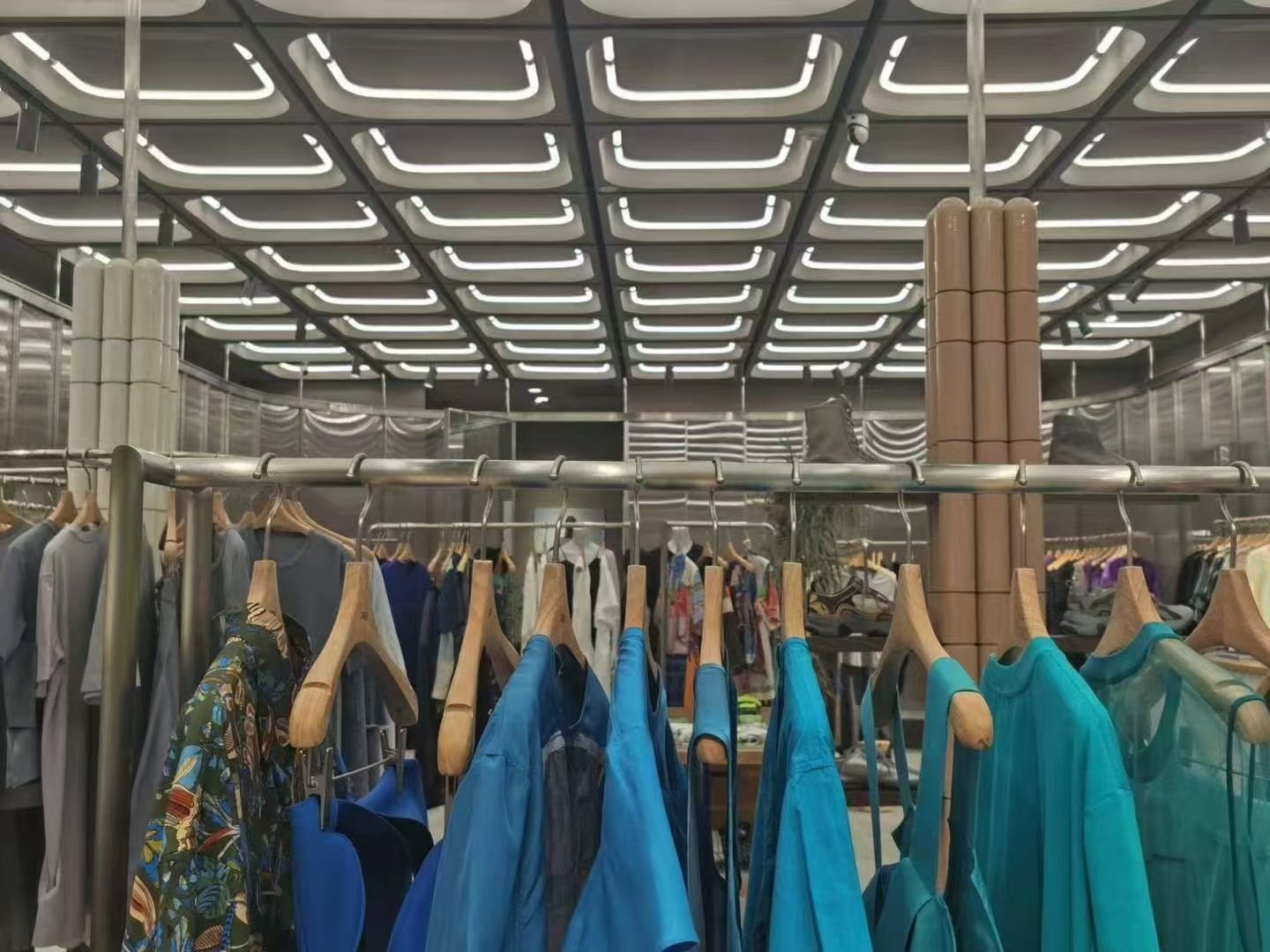
The supplied KLM project photographs document one retail installation from several viewpoints: a wide store view, ceiling-wide views and close details of the square modules. Client name, site location, exact dimensions, quantities, control system and performance results are NEED CONFIRMATION; this article therefore focuses on what can be verified visually and on the design questions that a comparable project should resolve.
What the completed retail view makes clear
The illuminated square forms repeat across the ceiling plane, while cylindrical spotlights sit within the larger grid. Together they create a ceiling language that continues through the sales area instead of competing with the merchandise below.
For a retail concept, this is useful when the lighting needs to do more than provide general illumination: it can define a zone, reinforce a brand-led spatial rhythm and give shoppers a memorable upward view.
Why repeated square modules work in a larger retail ceiling
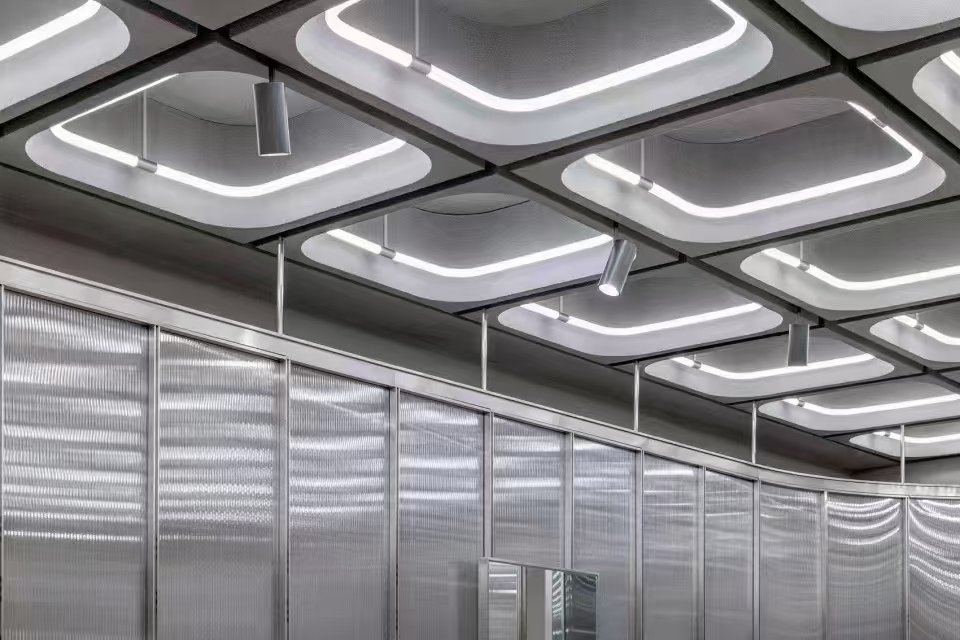
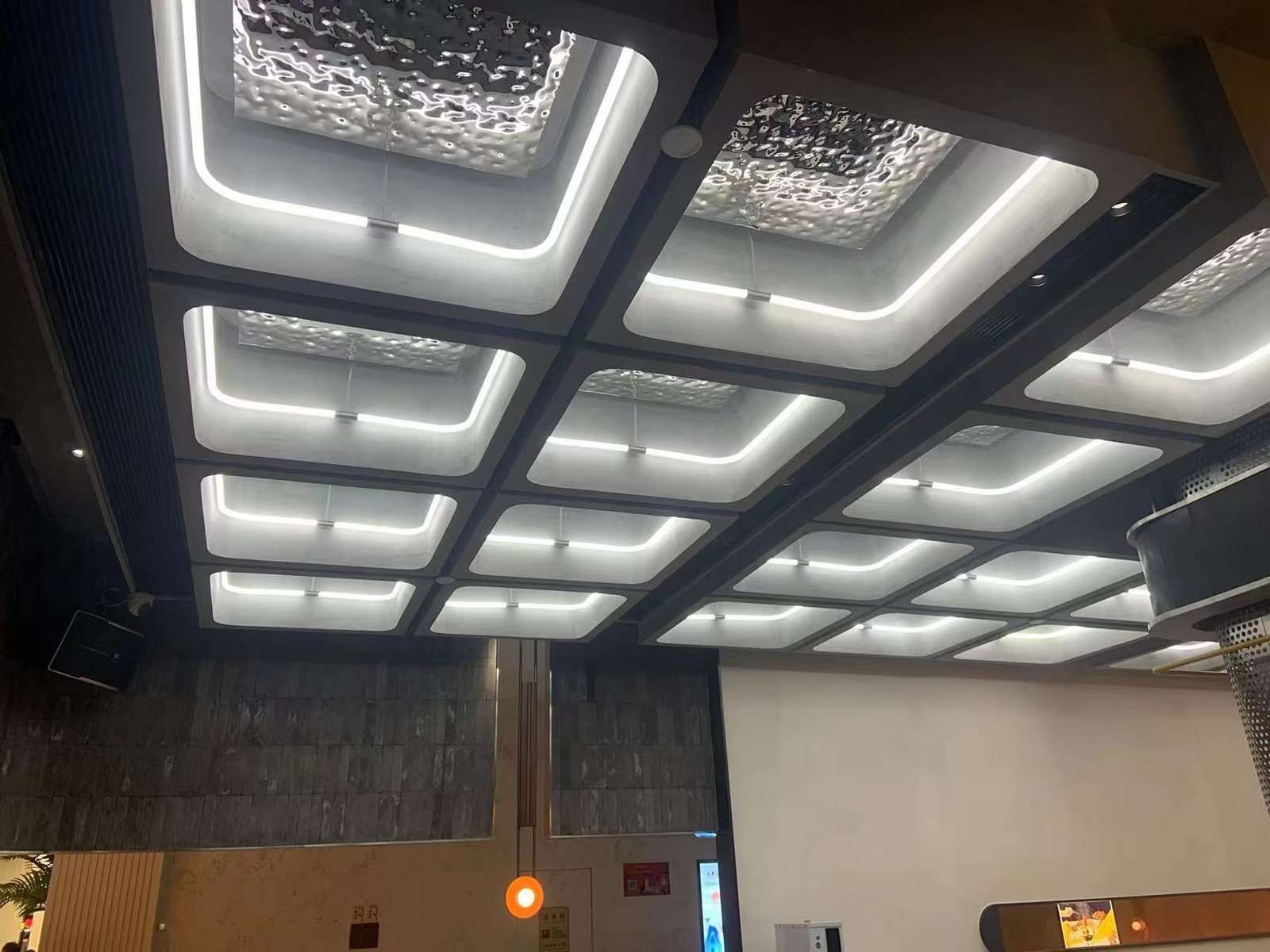
A single custom pendant can act as a focal point. A repeated module can do something different: it establishes rhythm across a larger footprint. In this project, each rounded-square light form reads as part of a larger ceiling composition. The spacing between modules, the orientation of the visible joins and the relationship to the dark ceiling grid are all part of the visual result.
Coordinate the ceiling grid before finalising the light form
The ceiling has its own structural and services logic. Before production, the lighting layout should be overlaid on the reflected ceiling plan with spotlights, sprinklers, HVAC, access panels, signage and any hanging displays. This helps avoid a final installation where a module is visually broken by an unrelated service point.
For KLM’s 360° LED acrylic tube system, the public product information describes 24V operation, multiple diameter starting points and custom forms. Final shape dimensions, mounting details, driver placement and electrical grouping remain project-specific.
Detail view: visible joints, orientation and surrounding spotlights
The close project views show why a custom ceiling feature needs a detail review—not just a beautiful concept image. A consistent orientation for module joins and a deliberate relationship with nearby spotlights help the pattern feel intentional. Review those elements in the final drawing rather than leaving them to site judgement.
What to include in the design review
- Overall module pattern, dimensions and orientation in the reflected ceiling plan
- Module-to-module spacing and alignment with the ceiling grid
- Location and intended appearance of visible joints and end conditions
- Coordination with spotlights, services, signage and displays
- Mounting interface, low-voltage power-feed route and driver service access
- Project quantity, delivery location and installation sequence
Need confirmation: structural support, electrical compliance, mounting hardware, final driver/control selection and all site-specific dimensions must be confirmed by the responsible project team.
From one module to a repeatable retail system
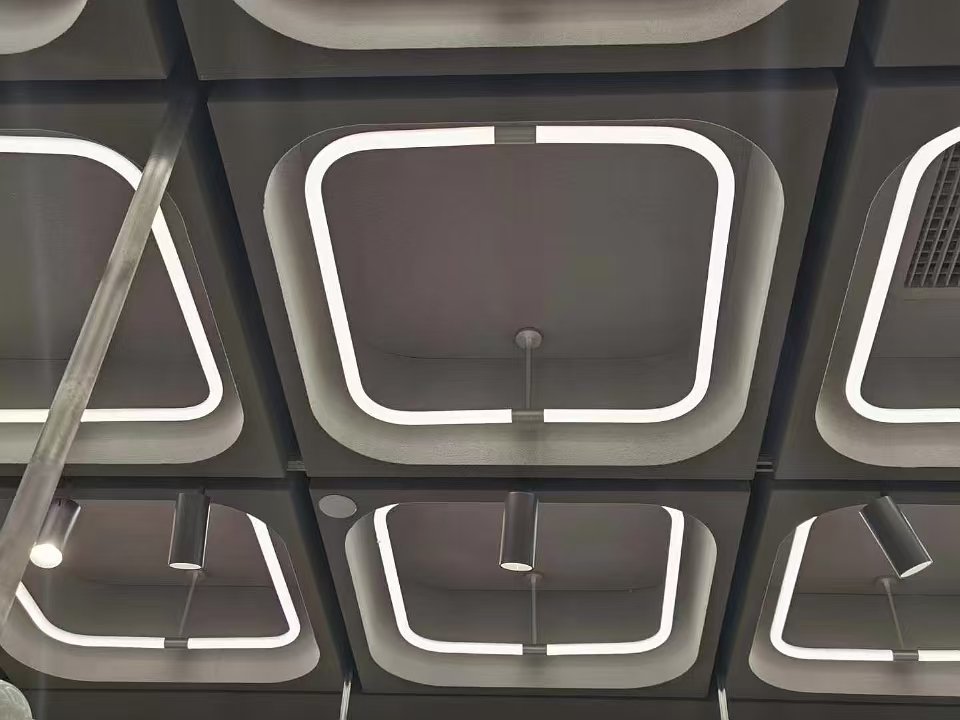
The close-up view helps a designer decide whether the module’s scale and surrounding material palette are appropriate before committing to a full ceiling pattern. It is the combination of repeatable geometry and project-specific coordination that makes this type of feature useful for larger commercial interiors.
For other formats and custom-shape starting points, see KLM’s 360° lighting category.
FAQ
Can 360° LED tube lighting be arranged as repeated square ceiling modules?
The project images show repeated rounded-square modules in one retail interior. KLM’s public 360° tube product page describes custom shapes; the final module size, joints, mounting and electrical arrangement must be confirmed for each project.
Is this a standard retail lighting product?
This is a project reference, not a promise of a fixed off-the-shelf configuration. Use the images to discuss the visual direction, then confirm the buildable shape, accessories and electrical plan for your specific ceiling.
Can a fashion chain use one ceiling concept across several stores?
A repeatable modular concept can be discussed for a multi-store programme, but it should not be copied blindly from one site to another. Confirm the local ceiling grid, services, mounting interface, power-feed plan and code requirements for each location.
What should a fashion brand, retail designer or shopfit contractor send for a comparable project?
Send the reflected ceiling plan, elevations, intended module pattern, dimensions, mounting height, reference images, project location, required quantity, store type and target installation date.
Discuss a modular 360° tube ceiling feature
For a comparable fashion-retail or chain-store project, send KLM:
- store format and project country;
- number of locations or expected project quantity;
- a reflected ceiling plan, section or ceiling dimensions where available;
- visual references and the intended role of the ceiling feature; and
- target review, procurement or installation timing.
Discuss a Retail Ceiling Feature Project
We can help identify an appropriate 360° tube starting point and the project questions to resolve before a custom feature is quoted. Contact KLM Lighting for a project discussion.
