


To specify a 24V 360° LED tube for a custom pendant, start with the drawing, tube diameter, light effect, suspension and control requirement. Then confirm the project-specific power-feed and joint plan before production. A product photo and a target length alone are not enough for a reliable quotation or installation plan.
This guide is for lighting designers, architects, contractors and buyers developing a feature pendant, chandelier, sculptural line or suspended installation. It helps a project team turn a concept into a clear request for quotation without assuming that one tube configuration fits every project.
Project reference: custom 360° tube compositions in commercial interiors
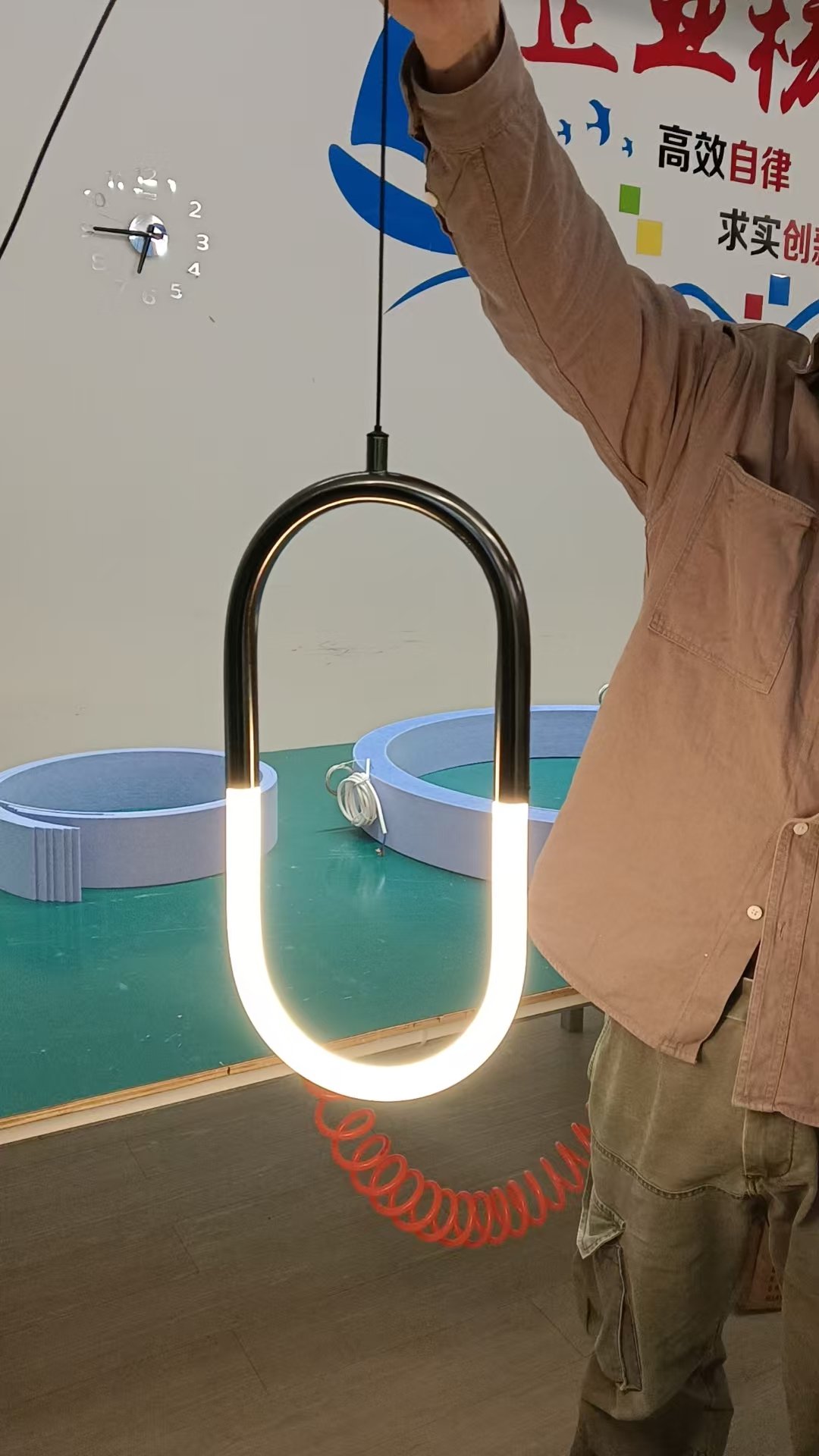
These KLM case references show three different design questions: how a 360° tube arrangement can create a visible ceiling composition in a commercial interior; how a custom U-shaped form can become a pendant concept; and why the connection and suspension detail must be planned as part of the fixture. The photos are visual references only: they do not identify a client, confirm a universal configuration or replace the final project drawing.
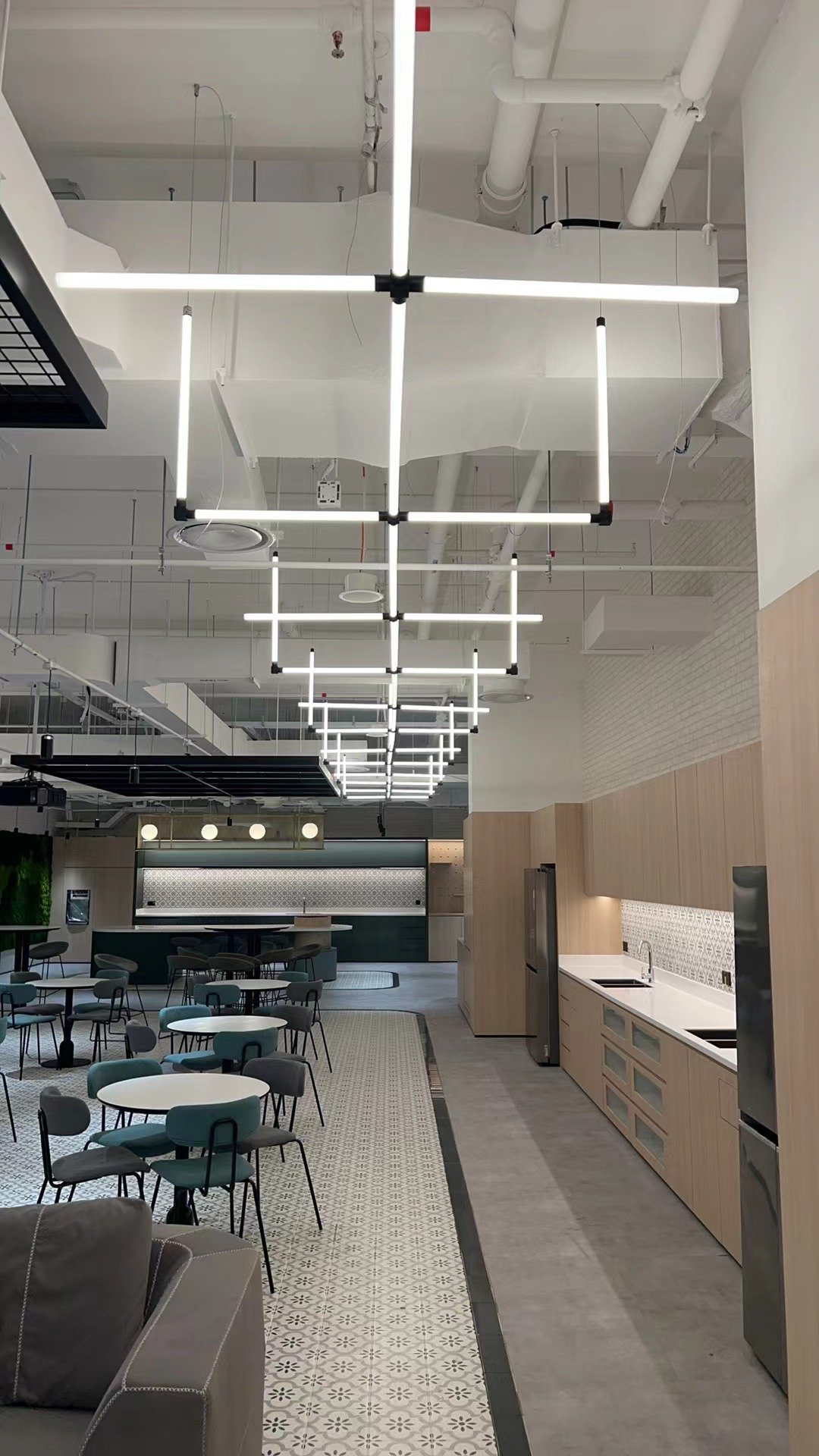
Start with the result the installation must achieve
Before selecting a tube, define what the light needs to do in the space.
| Project input | Why it changes the specification | What to send KLM |
|---|---|---|
| Visual concept | A continuous ring, a straight pendant and a shaped chandelier need different mechanical planning. | Sketch, render or marked-up ceiling plan |
| Mounting position | Suspension height, access and cable routing affect the fixing method. | Reflected ceiling plan, ceiling section and mounting height |
| Light effect | Decorative ambient light, feature lighting and task-related light need different output and distribution decisions. | Application, target atmosphere and any required calculation output |
| Tube geometry | Diameter, rigid or flexible construction and bend radius affect what can be made. | Overall dimensions, curves and segment lengths |
| Control | Single-CCT, tunable white, RGB/RGBW or pixel effects need different electrical components and commissioning details. | Required CCT/colour effect, control protocol and control-system brand |
Select the tube diameter and format before choosing a wattage
KLM’s public 360° Tube range shows D20, D30, D40 and D50 diameter options for 24V custom lighting. Diameter is not only an aesthetic choice. It changes the visual weight of the pendant, the available internal construction and the way joints, suspension points and accessories need to be coordinated.
Confirm the tube diameter and visible finish; straight, circular, curved or multi-segment geometry; rigid or flexible construction; individual segment lengths; the location of joints; and suspension-point locations before finalising the fixture.
Turn a sculptural reference into a drawing
A custom illuminated U form illustrates why a reference image is only the starting point. The quotation package still needs the overall dimensions, tube construction, suspension positions, feed route, connector locations and desired light effect.
Treat the 24V power plan as a project drawing, not a generic length claim
For a 24V custom LED tube, the electrical plan must be reviewed against the actual configuration. It should identify the tube version, watts per metre for that version, each segment length, driver location, cable route, feed points, joints and dimming/control components.
What to confirm before a power-feed layout is approved
- Final tube configuration and electrical load for every segment.
- Where the driver and control gear will be located and accessed.
- The permitted cable route from driver to tube.
- Every proposed feed point and connector/joint location.
- The intended dimming or colour-control system.
- The commissioning and maintenance access plan.
Avoid using a quotation-specific maximum length, a legacy project drawing or a generic internet rule as the power-feed plan for a new installation. Different diameters, light sources, outputs, formats and control packages can change the final design.
Specify colour and control as a complete system
The tube, LED configuration, driver, controller and project control system need to be confirmed together. A request that only says “dimmable” leaves critical choices unresolved.
| Required light effect | Information to confirm | Do not assume |
|---|---|---|
| Single CCT | CCT, dimming method, driver location and minimum dim level required by the project | Every tube version uses the same driver or dimming curve |
| Tunable white | CCT range, channels, driver/controller model and control-system compatibility | A standard DALI driver is automatically DT8-capable |
| RGB / RGBW | Required colour channels, controller, addressability and commissioning scope | RGB and RGBW use the same wiring or controller |
| Pixel effect | Pixel pitch, IC/controller, data direction, mapping and final BOM | A past DMX or SPI project establishes a default protocol |
For a DALI project, record whether the requirement is ordinary intensity control or tunable-white/colour control. DALI DT8 capability must be verified at the driver and control-gear level rather than inferred from the word “DALI.”
Coordinate suspension, joints and service access early
A custom pendant is part luminaire and part installed assembly. The drawing should show where the fixture is supported, where it receives power, how joints look from normal viewing positions and how a contractor can reach serviceable components.
- Confirm ceiling substrate and allowable fixing locations.
- Mark suspension-point spacing and any non-illuminated support wires.
- Show cable entries and canopy or remote-driver locations.
- Identify every joint and the required visual finish.
- Confirm which parts are accessible after ceiling closure.
Make connection details visible in the review
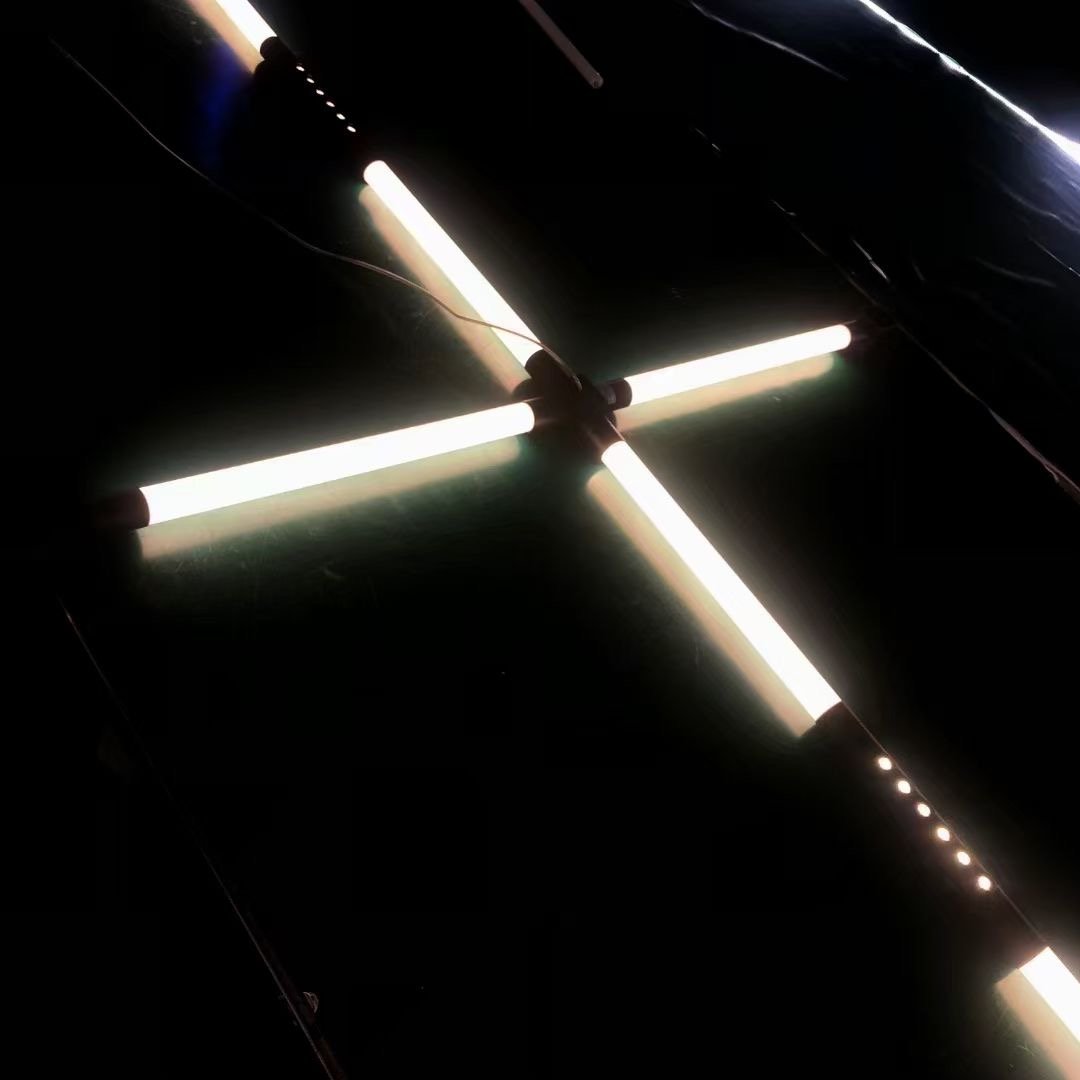
The connected-tube reference reinforces the practical review: suspension, cable entry, joints and service access must be resolved in the project drawing. KLM confirms the selected tube, connector and support arrangement for the final configuration rather than applying a generic detail to every concept.
KLM practical note
KLM’s current 360° Tube evidence includes custom configurations across D20, D30, D40 and D50 tube families, including acrylic-and-silicone constructions and office-project applications. The same evidence does not establish one universal maximum continuous run, one default joint method, a universal IP rating or a default DALI/DMX/pixel bill of materials. KLM should confirm those items against the final drawing, selected tube version and control package before the quotation is released for production.
Prepare a quotation package that can be checked quickly
- PDF drawing or render with overall dimensions and segment lengths.
- Ceiling plan and mounting height.
- Required tube diameter, shape and finish.
- CCT/colour effect and dimming/control requirement.
- Destination country and any project-specific documentation request.
- Quantity, target installation date and sample requirement.
This gives KLM a basis to recommend the correct product configuration and return the questions that must be resolved before a quotation becomes an order specification.
FAQ
Can a 360° LED tube be made into a ring or curved pendant?
Many custom shapes are possible, but the diameter, construction type, drawing geometry, segment plan and support points must be checked for the selected configuration. Send the drawing rather than relying on a reference image alone.
How long can a 24V 360° LED tube run from one power feed?
There is no safe universal answer. Confirm the final tube version, load, segment lengths, cable route, feed points, driver and control package for the specific project.
Can the tube use DALI or DMX control?
Control compatibility depends on the selected LED configuration and the final driver/controller package. State the required protocol and light effect in the RFQ so KLM can verify the complete system.
Which diameter should I choose: D20, D30, D40 or D50?
Choose the diameter from the intended visual scale, shape, suspension design and construction requirement. The final selection should be checked with the actual drawing and application, not only by output or appearance.
What do you need before sending a sample or quotation?
Provide the drawing, quantity, required light effect, preferred control method, destination and target timing. If the tube is part of a custom pendant, include the ceiling detail and suspension concept.
Ask KLM to review the project configuration
Send Your Pendant Project Brief
Contact KLM with the ceiling plan, fixture drawing, desired tube diameter, light effect and control requirement. For more product context, see the 360° lighting category and the dimming-method guide.
