


RGB and RGBW 360° LED tube lighting can turn a ceiling, retail display, hospitality feature or exhibition space into a colour-changing visual element. Before a custom project is priced, the designer and contractor need to define more than the preferred colour: the geometry, cable route, controller requirement, installation method and service access all affect the final solution.
Who this guide is for
This guide is for lighting designers, contractors, distributors and project buyers planning a commercial feature-lighting installation. It is not a promise that one RGB configuration, controller or control protocol suits every project.
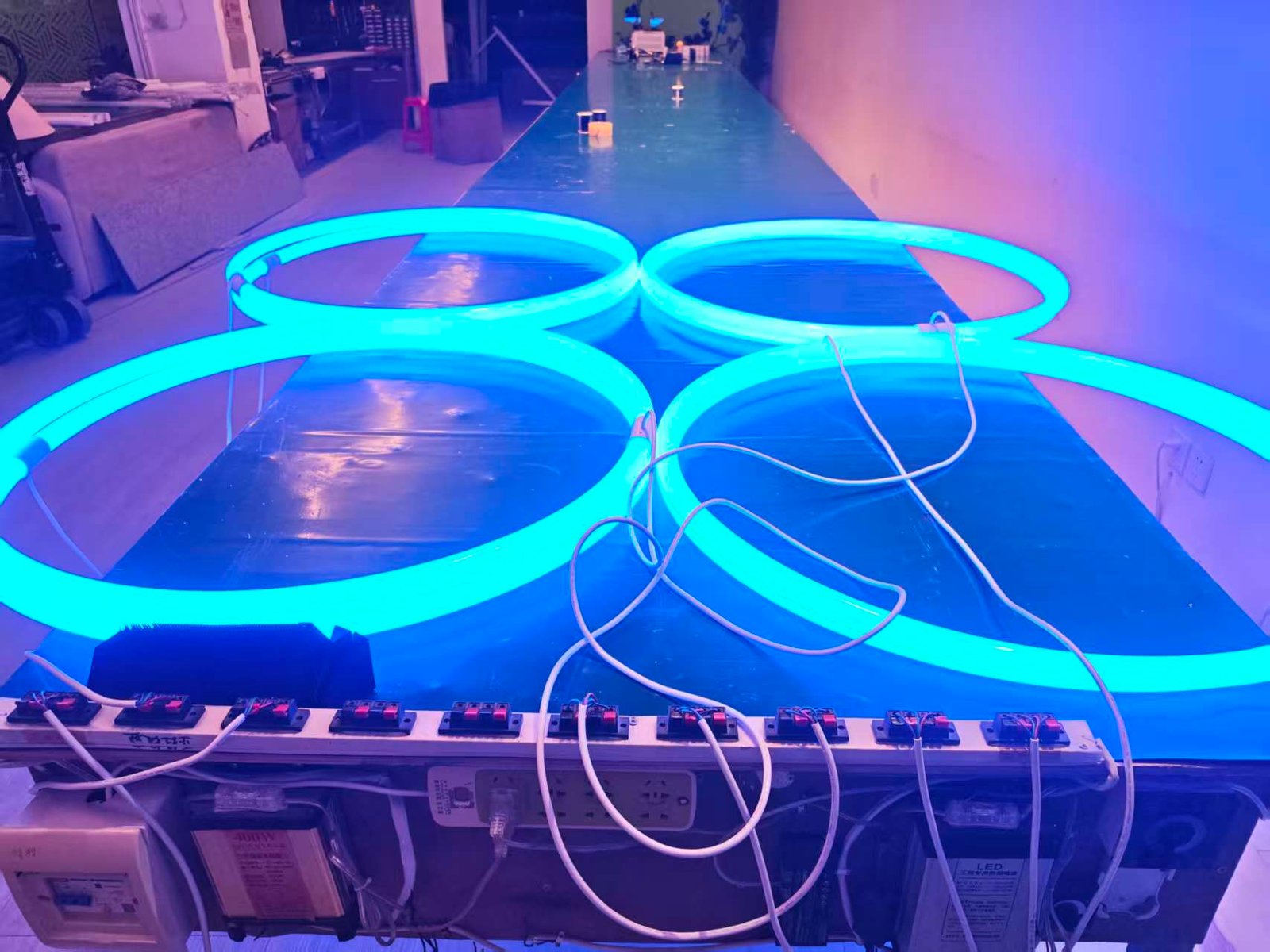
Start with the design intent
A useful brief states what the colour-changing light should achieve in the space. Is it a permanent ambient feature, a retail focal point, a hospitality atmosphere, an exhibition element or a changing visual display? Then provide the drawing that shows the exact route of the tube.
- Dimensioned CAD drawing and, preferably, rendering or reference image
- Overall lengths, curves, visible segment locations and quantity
- Mounting route, suspension points and cable-entry possibilities
- Required colour effect: RGB or RGBW, plus any white-light requirement
- Controller, dimming or building-control requirement if already defined
- Driver/controller location and post-installation access
RGB versus RGBW: confirm the intended light effect
The decision should be made from the project’s lighting intent, not only from a colour-wheel image. RGB and RGBW need different wiring and control arrangements. KLM reviews the final configuration against the project drawing and required effect before quotation.
| Question to resolve | Why it affects the project |
|---|---|
| Is a usable white-light scene required as well as coloured scenes? | This affects whether RGB or RGBW is the appropriate request. |
| Will the tube be a continuous line, a shaped pendant or a multi-segment composition? | Geometry changes the segment, support and cable plan. |
| Where can the driver and controller be installed? | These locations must be accessible and coordinated with the ceiling or structure. |
| Which control system must the installation work with? | Compatibility must be checked for the selected LED configuration and controller package. |
Plan joints, feeds and maintenance with the drawing
Colour-changing 360° tube projects should show every proposed joint, feed point and support location before production. A generic maximum length or a previous project detail should not be copied into a different shape without review.
- Mark the individual segment lengths and proposed connector locations.
- Identify the viewing direction so visible joints can be considered in the design review.
- Show the cable route from the tube to driver/controller locations.
- Confirm how the contractor will reach serviceable components after installation.
- State whether commissioning is part of the site scope and who supplies the control system.
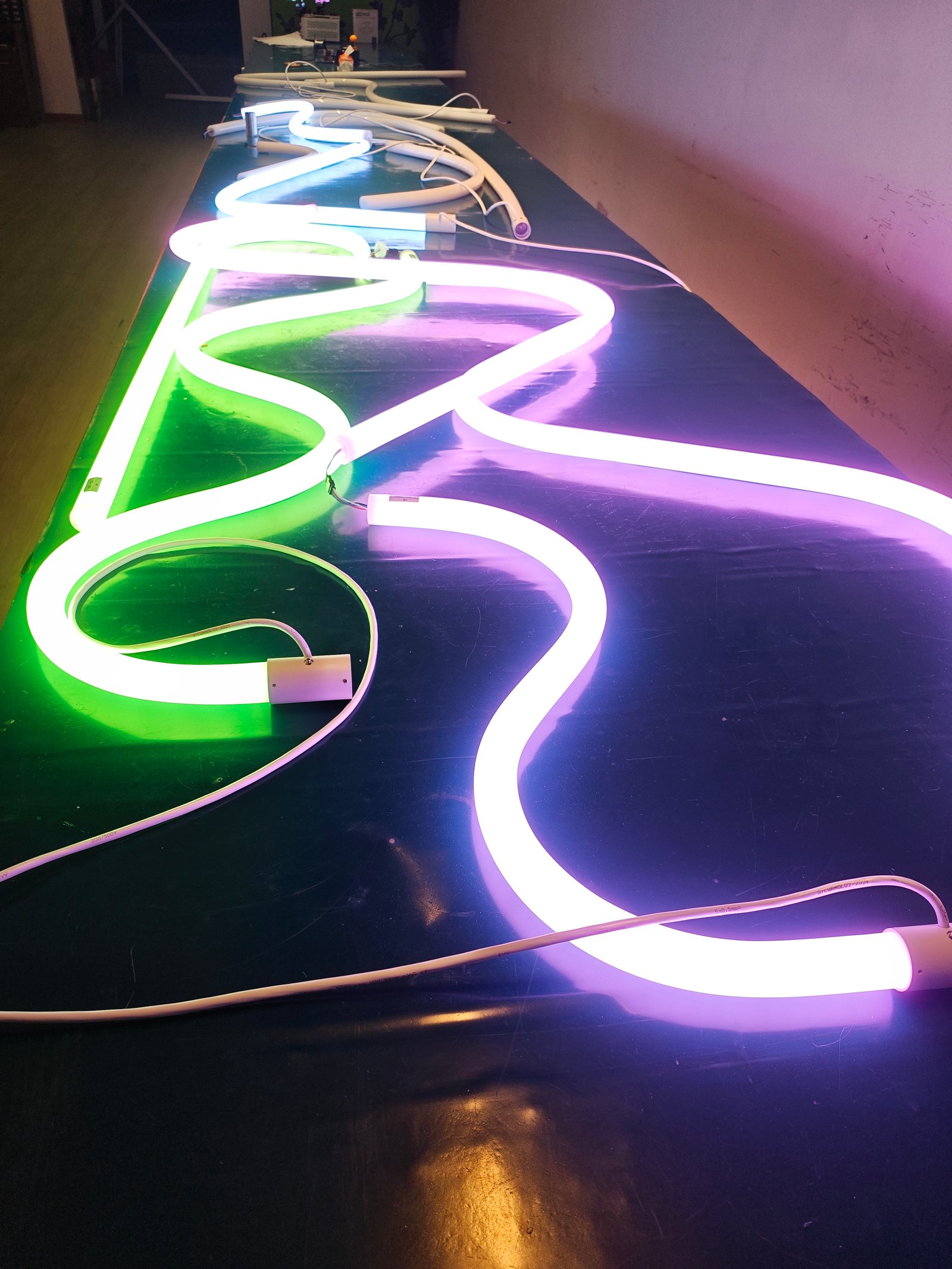
KLM 360° silicone tube option for RGB/RGBW projects
KLM’s 360° silicone LED tube with aluminium profile includes a first-generation configuration that can support RGB/RGBW projects with planned segments and joint structure. Its aluminium profile provides structure and an installation route for custom forms.
The same family also includes a second-generation single-colour option that can be made up to 30m without intermediate joins, subject to drawing and power review. That seamless option is not the RGB/RGBW choice. The project team should select the configuration from the required lighting effect first, then review the construction and electrical plan.
Common mistakes to avoid
- Requesting “RGB” without defining whether a white-light scene is needed.
- Approving a shape before showing the support, cable and driver locations.
- Assuming that an RGB/RGBW project can use the same controller, wiring or maximum run as a single-colour project.
- Leaving joint positions and service access until after the ceiling or structure is closed.
- Using a factory test image as evidence of an installed customer project.
What to send KLM before quotation
- CAD drawing, dimensions and quantity.
- Render or reference showing the intended visible effect.
- Required RGB or RGBW effect and any defined control-system requirement.
- Mounting/suspension details, cable route and allowed driver/controller location.
- Destination, project timing and sample requirement.
KLM can use this package to check technical feasibility, recommend a suitable configuration and list the items that still need confirmation before production.
Send your RGB / RGBW 360 LED tube project brief to KLM with your CAD drawing, visual reference and control requirement.
FAQ
Can KLM make a 360° LED tube in a custom RGB shape?
Custom forms can be reviewed from the drawing. Final feasibility depends on the selected t
